Featured

Third Time’s a Charm

Here we go, Cosentyx, here we go!

I’m like a cheerleader with this new immunosuppressant.
A monthly shot only, the only downside I can see at this point (after three months on the med) is that those last few days before the next shot, my body starts to rebel. My feet ache, as do my ankles, elbows, wrists and — the worst — my neck and shoulders.

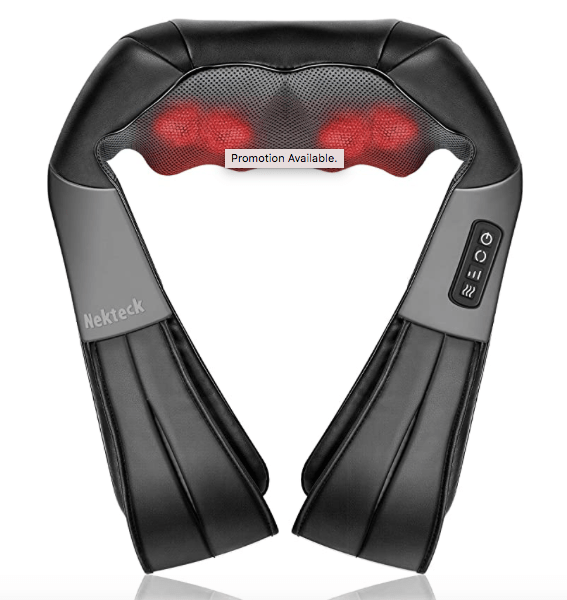
(Sidenote: My sister sent me a neck massager with a heating function that I use almost daily, no matter the time of month. It is one of the best gifts I’ve ever received. It looks like this:

…and it’s been a lifesaver. )

The thing I’m realizing, too, is how ankylosing spondylitis saps the life out of you. As I approach the end of the month, I feel twenty years older. Mornings are productive, my mind sharp, and tasks get accomplished. But come afternoon, around 4:30 or so, I start to flag. I feel the balloon that is wakefulness slowly letting out air, and by 9 pm I’m ready for bed. I’ve always read before going to sleep, but on those nights, as soon as my head hits the pillow I’m out. The week before my shot I had three nights wherein I slept more than 10 hours. The exhaustion is real and sneaks up on you.

Of course, my witty therapist told me I have to also realize that I’m getting older. We were having an online session and I gave her a look that received a “What? It’s true!” response. I’m 51, people, and I have so much left to do in this life.

My shots are usually on the 6th of each month. I could not wait for that box to arrive in the mail, cold-packed, my Cosentyx auto injector inside. I made a point of paying attention to how wiped out I was pre-shot versus how I felt a couple of days post-injection. That couple of days is today. And I do feel more energetic, less ready to crawl into bed and nap for 12 hours.

I need to increase my level of mindfulness around this exhaustion issue. It’s a sign that my body and mind are spent, and perhaps I could do more to support both. I’m way too young for lethargy to be this bad. Perhaps I’m fooling myself, but this is not the time to be limiting experiences or slowing down. I’m working with a personal trainer to increase my strength, and I’m trying to cut back on the two foods that sit at the top of my personal food chain: cheese and chips. Portion control is a battle, but I know I’d feel better with less weight on this body.

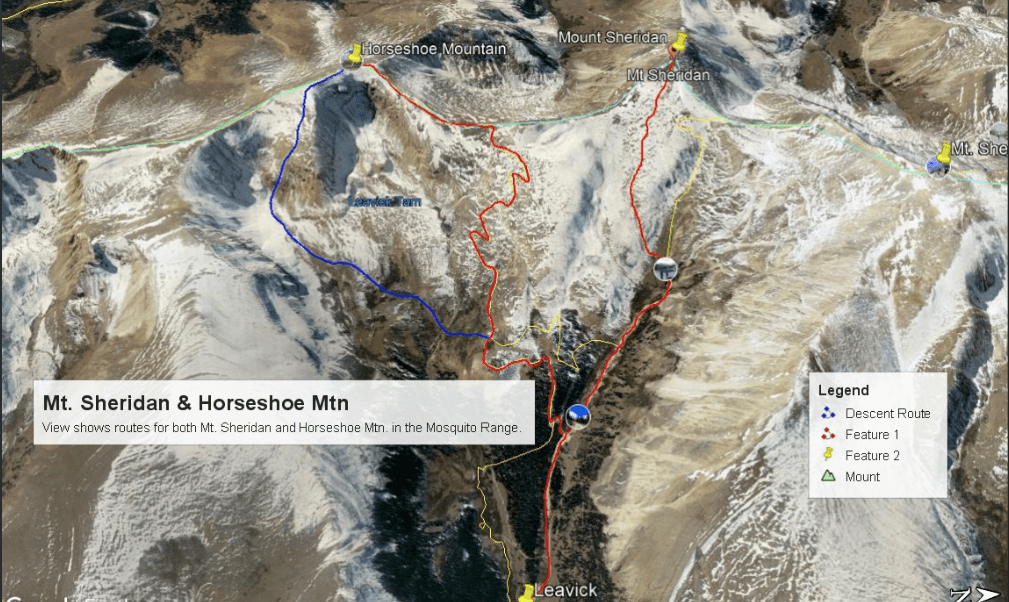
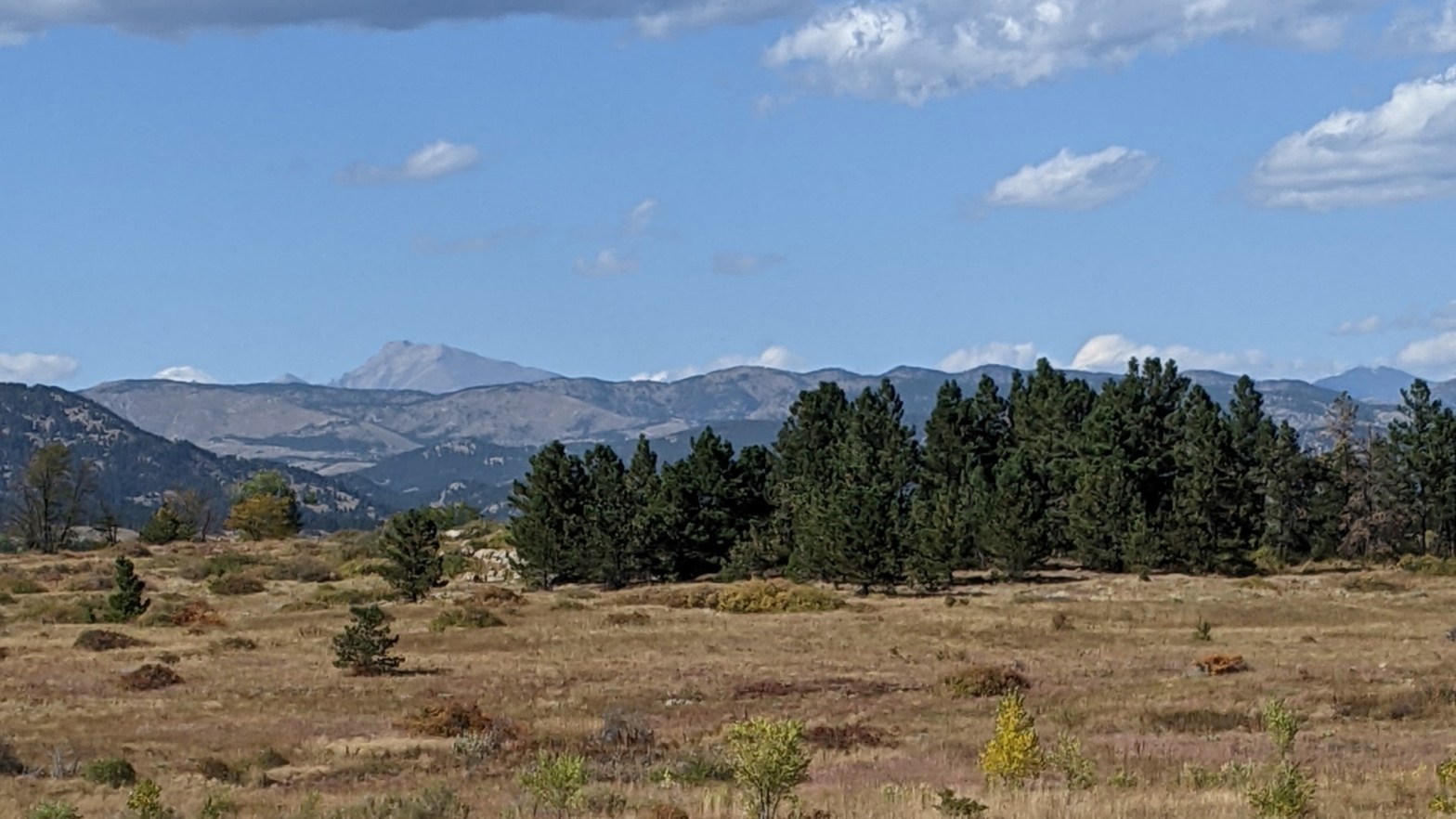
Yesterday I did a short hike up Marshall Mesa outside of Boulder, Colorado. It was a stunner of an autumn day, and the Front Range of the Rocky Mountains was on full display. The photo I used for this post’s header was taken on that hike. I didn’t go too far, as I’m starting from zero fitness wise, but just moving my legs felt good. Familiar. I used to hike a good deal, but then…I didn’t. I want that person back–the one who never went a weekend without a long bike ride or a hike, the one who pushed her physical limits often. Even as a larger woman, I was pretty damn fit. But I lost myself along the way, somehow, and I stopped moving in any way that felt “uncomfortable.” Trouble is, I know better. Yoga calms my central nervous system in immeasurable ways, and I could hike for miles and miles once I get rolling. There’s a destination on my horizon: Climb a 13er by the end of June, 2022. Horseshoe Mountain at 13,898 ft, then across a saddle to Mt. Sherman. Goals.

Image provided by Climb13ers.com

Featured

Moods and Molecules

Since launching this blog, I’ve been on three immunosuppressants: Humira, Enbrel and now Cosentyx.

Humira felt like a wonder drug to me until I started to crash for no apparent reason – crushing fatigue, foggy brain, confusion. I got lost in a doctor’s office, and I’m the one with maps in her head. Take me to a place and I’ll always remember how to get back there — except when on Humira.

Enbrel has a similar molecular structure, but we tried it anyway. Meh. Instead of reducing my pain and discomfort significantly, say 90% (a miracle), it reduced it to more like 60%. My neck continued to bother me, and I didn’t go through a day without substantial neck pain, while my shoulders and pecs morphed into taut sails, tender to the touch. And my feet. My feet HURT. Every day.  It was as if my soles had been whacked with a log, over and over, leaving deep bruising. Dealing with the nagging discomfort of a Morton’s neuroma every day was hard enough, but this nasty foot discomfort pushed me over the edge. 

There are times when I’ve felt too much like my father, who complained often of pain in his feet, and whose lumbering gait was visibly affected by it. I don’t like the ghostly inhabitation I experience in those moments. It’s too mechanical, too inherited, too tied to being obese and not taking care of oneself, at all.

It’s also come to my attention that these medications may be affecting my mood states and inducing symptoms I’m not ready to talk about yet. Of course I’ve spoken with my mental health support system about this, and I’ve informed my rheumatologist. No surprise that he said such connections are “extraordinarily rare” and basically dismissed me. Ah, I wanted to scream, ask my family about “exceedingly rare” and Meghan. 

My life has been littered with health woes that wouldn’t be classified as “common,” so it’s not that difficult to take the doc’s dismissal with a grain of salt. I’d still have hearing in my right ear had an ENT listened to me (the irony) instead of blowing off treatment to the point of no return. At 15 years of age, I didn’t have the ability to fight for myself, and I didn’t dare complain.

One day, not long before I had surgery to remove my right ear drum and “hearing” bones, I sat in the ENT’s chair while he scoped me, writhing in pain. The doctor said, “what’s wrong, I’m barely touching you,” and my mother stood near the door, a frown on her face. She was mad, believed I was being dramatic and making things difficult for the doctor. She believed him over me, and I never forgot how that made me feel. So began my lifetime struggle with being believed. I still struggle with it.

My father’s favorite phrase that he levied against me as a kid: “Stop playing games.” Nevermind that my brain was persistently setting off flares, rage bubbling, my mind a cauldron of mixed states. I wasn’t playing games. I was carried on giant sparks rising from a conflagration within me, a terrified and confused kid who struggled mightily to control her emotions. But no one seemed to care much, or else they feared me.

To this day I’m the one who carries the stigma of “uh oh, watch out, she may blow!”, even as I have worked doggedly to find that space between explosive reactivity and measured thoughtfulness. Most of the time I’m able to tend the fire without it burning anyone else. 

It remains a daily struggle, but I’m equipped with many tools now that help me catch myself before things get too out of hand. 

Who really knows if biologics affect one’s mood. I suspect that drug companies that are making hundreds of millions of dollars off of these drugs would rather that connection not exist. But let’s be honest about our knowledge of the brain – we know so little. My current perfect storm of perimenopause/menopause, mental distress, COVID weariness, job stress, pain and more pain make it difficult to tease out cause and effect. I can only speak to my experience, how it feels managing this disease day after day, what it’s meant to hit an impenetrable wall of limitations that I did not anticipate. 

I wonder how the hell I’m going to live out my life this way, and whether or not it will be cut short. Autoimmune diseases do that, shorten the life span. There’s no reversing this, either. No diet, no magic pill, no experimental treatments. Just a shot in the gut every week and the desperate hope that relief isn’t far behind. 

And you, reader. I feel you.


Featured

Carve the New Groove

In a recent Instagram post, I shared an experience I had the night of my second COVID vaccine shot.

This was the post:

It’s a very weird thing to inject oneself with an immunosuppressant drug and then, the very next day, get the second dose of the COVID vaccine. 

Last night, unable to sleep due to intense body aches, I imagined a battle inside of me. And instead of freaking out, or lamenting my lifetime of illness, I decided to love on this body of mine. I touched it gently, caressing my arm and saying “You’re doing a great job, you’re working so hard. Thank you. Thank you for taking me this far.” And you know what? 

From the depths another voice emerged, echoing those words, saying them right back to me. I didn’t even realize it was happening and then it became so clear: My body was responding. I had passed into a place of self-love that I never knew before. Instead of hating my body for what I perceive as failings, I flipped the narrative and dug a new neural pathway. Riding the fresh powder of the vast brain, I carved a line of gratitude for this skin, these bones, this system that carries me through, day after day. 

And it worked.


Freaky, right? Maybe I was imagining things, snared in a fever dream. The thing is, I woke up feeling like I’d shed a stubborn old skin.

When you’ve lived decades disembodied and distrustful of your body, the default position is damn near intractable. I came by my body hatred honestly: a father who emanated self-loathing that tinged our days with an anxiety and anger we couldn’t begin to understand, let alone reject. What we knew was that he was a big man, powerful, his knees shot from playing football. Dad obsessed about food, studied it, planned for it, yearned for it — and though he ate to his heart’s content and then some, he was never truly sated.

(An image of my father
standing at the refrigerator
shaft of light on the tiled floor
rustling of a plastic deli bag
slice after slice of hard salami
washed it down with buttermilk
the shame of hidden
consumption)

Dad had very little patience for the appetites of his children, and he was a yeller. Too often he rode our asses about drinking water, about not eating too much of X, while also throwing out sideline comments about weight and exercise. This came from a man who just kept getting bigger and bigger until both of his knees failed, his discomfort was palpable, and gin became his best friend.

Complimenting his children was anathema to Mr. Howes. His was a method of withholding, because the opposite indicated tacit approval. If he dared tell me that I looked pretty in my new rainbow shirt (after my Mother repeatedly tried to get him to pay attention, look up from the book) then he was accepting me as I was, condoning it even. And he could not do that. I was not good enough, not yet.

Frankly, I was never good enough. None of us were. Unconditional love is not a Howes strong suit.

I was put on my first diet around 10 years of age. To this day, don’t ask me to smell — let alone taste — Mrs. Dash. Stewed tomatoes make me gag. My mother was never one to stock the pantry with processed and/or prepared foods (I appreciate this now, but didn’t then), so I developed an insatiable hunger for such things, particularly Pop Tarts and ice cream sandwiches. We lived near a Speed-E-Foods convenience store, and around the age of 10 (close to when I gave my first blow job), I began swiping dollars from my mother’s wallet (but only if there were more than three bills because she’d never notice one was missing, RIGHT?) so I could gorge on sugar.

When I was 13, I was sexually abused by a 23 year old.

I lost my virginity at 18, in a dingy basement apartment in Toronto, and I used a contraceptive sponge because for some reason I thought it was my responsibility, having been told by every boy I knew, in some roundabout way, that a condom is just a horrifically evil penis suffocating device designed to kill all sensation and pleasure.

My “first time” was not pleasurable. Soon thereafter, that man, my Canadian boyfriend, told me he thought he might be gay. He was on top of me, looking down with such fear and sadness his eyes. More mortified and confused I could not have been.

(Don’t think too much about how I had substantive relationships with two boyfriends who “ended up” gay. There’s no easy explanation. Or maybe I knew, subconsciously, that those men didn’t want me, and it played into my persistent feelings of rejection and despair.)

What I didn’t understand yet was that I’d begun to disassociate when faced with physical intimacy. It wasn’t until I fell in love with a woman and had subsequent relationships with women that I realized my tendency was to perform, to be performative, and to not be present. I didn’t expect much in return, subsuming my own desires, dialing my pleasure switch to the OFF position and taping it there.

In my younger days, I could be a flirt, I’ll admit it. Some may even use the term “player” to describe my initial years in Montana; I arrived believing that I would be the only lesbian within hundreds of miles and was proven wrong, fast. The thing is, it was easier to flit about and “play” the field than it was to be vulnerable, truly intimate. Of course, I wasn’t fully conscious then that beneath it all, I was dealing with bipolar process and drama/sabotage had developed into a bit of a modus operandi. What an exhausting way to live.

Terribly susceptible to adoration and in complete awe of how many women- loving-women walked the streets of Missoula, I found myself in some pickles. I also met my wife, but it took a long time for me to level out enough to pay attention to the Woodson treasure come to the Treasure State.

Underneath it all, I hid secrets. It’s not like I could come right out and tell a girlfriend “hey, I’m not very present in bed, but dammit if I won’t make you feel like a million bucks.”

That disassociation lasted well into my relationship with Sandy, and I didn’t even begin to unpack it until I got deep into talk therapy and started taking medication.

I say all of this to illustrate why what happened to me last week was so extraordinary and body affirming.
_________________

Way back in 1877, philosopher William James wrote of how the behavioral patterns that humans possess — commonly known as habits — define our personhood. This sounds pretty basic until you start considering how habits can be changed, and how hard it is to change them.

All humans have the power to carve new neural pathways, and if we can approach it as an adventure, breaking new trails into the depths of our consciousness (and subconscious), then the power shifts. No longer are we merely products of our own circumstances, or things that were out of our control — as we age and gain life experience, we better understand that we DO have the power to change.

Change is just the beginning. It’s what emerges as those changes take hold that’s the true reward.

And so when I spoke to my body last after that second vaccine and thanked it for working so hard to keep me going, it was the first time I’d ever attempted to skip out of that deep groove of self-admonishment and start carving something far less damaging to my overall health.

I flipped the script, told that uncompromising, never satisfied part of myself to scram, to stop with the incessant judgment.

Acknowledged the miracle that carried me this far.

Called forth the shadow and carved a new pathway.

My body had something to say.


Featured

Bursting Into (In)flame

Quick #backpocketpost today I reflect on my experience this past Wednesday.

I never really thought much about “systemic inflammation” before I was diagnosed with ankylosing spondylitis. I knew that my c-reactive protein level was way up, but I didn’t appreciate how high it really was, and my body was battling something that not only inflamed my joints but increased my risk of heart attack and stroke by more than 75%. Or so I was told.

Now I think about inflammation all the time. Well versed in those things that create inflammatory responses in my body, I am. Diet seems to be one of the biggest culprits — there’s a genetic marker for this particular autoimmune condition, but I don’t even know if I have it. It wouldn’t change much if I did know, to be honest.

What I’m learning, somewhat (very) begrudgingly, is that I have much to understand when it comes to managing this condition. I don’t have the same kind of energy I once did, and certain inflammation-producing foods can invite serious pain and discomfort.

This past Wednesday I was assisting a friend with an app project, listening as she described the scope, taking copious notes. Because this project involves wine and beer, I was tasting some wine. I didn’t think it was much — in the end I may have had two glasses, max. Beautiful Chardonnays (California, Hungarian and French), and a bit of Italian red.

I rarely drink wine, and if I venture into those waters, it’s usually a celebratory glass of Champagne or Prosecco. And even as I knew better, it appears that I didn’t eat enough before I went to my friend’s place. This became apparent later, when I got home around 10 pm feeling very empty (said friend did put out food; I just didn’t eat enough of it. Passing up cured meats is hard for me to do, but those meat products are inflammatory, and I can avoid them relatively easily). Within an hour from getting home, I got sick, as in vomited.

This had not happened to me from drinking in many years.

But that was just the beginning. I felt…off. My stomach was rolling, and I felt woozy, foggy, a headache forming, my back starting to yell. I went to bed, and fell asleep for about an hour, but when I woke, it was as if the joint pain had traveled throughout my body. Pain spreading like ink in water. I couldn’t find a comfortable position on either side, or my back. I got up, and was surprised and shocked to feel that my hip flexors were so tight it felt as if they could rip at any moment. I dug my hands on each side where the hip meets the leg, basically into the groin, and pushed, as if to break up the rope. Doing so took my breath away.

From about 3:00-5:00 am, I read. I tried to read about AS, but got way too freaked out. I took a Meloxicam, when what I really wanted was a Xanax. I went back to bed and still could not sleep, and at this point I felt desperate, anxious, hopeless. I started to cry, and knew I couldn’t hold it in. I didn’t want to wake my wife, so I gathered my pillows and a blanket and went into the guest room.

I let go. Bawled, my breath taken with every sob. I watched the light come into the window, dawn breaking, the cats circling at my feet. I felt like I was breaking.

Over and over again the same thought turned in my head: This disease, it’s all my fault.

If only I wasn’t fat.
If only I didn’t have all the health problems I’ve had over the years.
If only I didn’t struggle with the ultimate Heavy, which is depression.
If only I’d been more careful, so long ago, and not allowed that horrible man touch me where he had no business touching me.
(There is a school of thought that believes childhood trauma is a leading indicator of whether or not a person will develop an autoimmune disease.)
If only I’d been embodied in my lifetime, instead of so disembodied that I didn’t care. (Sexual abuse can do that to a person, often.)
If only I didn’t love beer and the beer industry so damn much.
If only I hadn’t smoked Camel Lights, even if I was “just a social smoker.”
If only I didn’t adore CHEESE. And beef.
If only.
If.

The list was endless, and I was tired. Extremely tired.

The fact is, I did too much on Wednesday. I had a mole on my nose removed, I picked up my new glasses, I stopped at the grocery, THEN I went to hang with my friend. And I didn’t fuel my body properly.

Finally I slept for about two hours, from 6:15 to 8:15 am, then from about 9-noon. When I woke up, I felt like I could still sleep all day. But I needed to get up, move. I knew I couldn’t put on a happy face and get on the porch for my daily poetry reading (#poemsfromtheporch), so I cancelled it. Then I was out of it all day — my body still hurt, though nothing like it had in the middle of the night, and I was so lethargic that my watch became the thing telling me to MOVE because it felt too arduous to do so. Damn Garmin watch, always meddling (frankly, that’s why I bought it — that, monitoring my heart rate, and tracking activity).

Conveniently I came across something on an AS forum that explained what may have happened to me: Wine is the worst kind of alcohol one can consume when dealing with this particular disease. Both sulfites and tannins (sulfites are the true culprit) can add to the already-intense inflammation caused by alcohol itself (and wine is sugar more than beer is sugar). Some people say that the immunosuppressants we “anky spondy” folx inject react to wine in a particularly noticeable way. Sounds like I had a pretty common reaction.

Sounds like my wine drinking days are behind me.

Sounds like I’m breaking up with regular meat and dairy.

Chafe, chafe, chafe.

I’ve got some work to do. Acceptance is a Fourteener, and I’m no mountaineer.


Featured

My Gay Boyfriend


I can’t remember a time when I didn’t love music. I’ve seen more live shows than I can count, and nothing else has the same ability to transport me to another time and place entirely. Whole relationships are captured in a single song. There were albums I didn’t listen to for years because of how much I played them with a former boy/girlfriend. Music moves me, rocks me, shakes me up and makes me think, remember, stop. It demands my attention, and I give it, willingly. 

Yesterday I was cleaning out our van post-spring break road trip. I’d put on a Spotify station, 90s alt rock, and was scrubbing the floor when Pearl Jam’s “Elderly Woman Behind a Counter in a Small Town” came on. I felt something in me react, like a hunger pang, but I didn’t think much of it at first. Then it grew. I’m singing along…

I swear, I recognize your breath
Memories like fingerprints are slowly raising

…and all of a sudden he’s there, it’s all there, and I remember that it was my last real boyfriend, Jessie, who introduced me to this song, included it on a mix tape. 

Flooded by emotion I was. It was like a torrent at first, coming fast. No amount of bailing could contain it. 

Jessie* and I met when we were 13 (or thereabouts). I don’t remember when it was that he asked me if I would “go with him,” but I do recall that he strung me along for two weeks, easy, telling me that we were going on a picnic and he had something to ask me. I was so excited; I really had a crush on this guy. We spent hours on the phone pouring over The Preppy Handbook as I fingered the buttons on my Pappagallo purse cover. He called me Muffy and I called him Biff. I loved holding his hand. 

Right before the big picnic day, Jessie was again teasing me about those five words. “I’m just going to ask you,” he said. I waited in anticipation, my stomach full of butterflies. I was waiting for those magic words: “Will You Go With Me?”

He continued. “Do you like tuna fish?” he said, and then laughed and laughed. Tears welled up in my eyes, but I tried to laugh, too. “Ha ha, Jessie,” I croaked. 

Secretly, I was crushed. What I didn’t know then was that this was a sign of things to come. An ominous, telltale sign. 

_______

I changed by not changing at all
Small town predicts my fate
Perhaps that’s what no one wants to see
I just want to scream hello

Jessie and I dated through most of high school, though he attended a Catholic school and I was in the public system, so we didn’t see each other every day. We talked on the phone often, and hung out on the weekends. Sometimes I’d go to his house or he’d come to mine, and I knew his family pretty well. His father wasn’t around much when I was there, but I’d met him. He had a wonderful smile and he drove a van, and I’d catch glimpses of him occasionally. His ghostly presence did not prevent Jessie from telling me what his Dad thought of his girlfriend, however – he’d apparently laughed at the fact that we were hanging out, said I was fat. Jessie reported this to me with a big dose of glee. It was as if he’d wanted to say it all along but used his father as a foil. These jabs hurt me, deeply. 

We went to my Senior Prom together. I wore a pink silky dress with a drop hem that made me feel like a princess mermaid, and Jessie wore a tux with pink cummerbund and black Chuck Taylor high tops. The theme of prom was “The Time of my Life,” which was accompanied by the song from the movie “Footloose,” by Bill Medley and Jennifer Warnes, one of my favorite songs at that time.  

Jessie and I danced and danced and I marveled at the fact that my little white purse never fell off my sloped shoulder. 

I believe it was sometime in that same year that Jessie “went down on me” and it was a dismal failure because he kept complaining about every little thing: my position, the blanket, the lighting, his comfort. Then he bitched for a week about how his neck hurt. I was ashamed and mortified. We would not be repeating that.  Again, it seemed that Jessie reveled in my discomfort.

All these changes taking place
I wish I’d seen the place
But no one’s ever taken me


_________

Since we were a year apart in school, I went away to college while Jessie finished his senior year. We were on again, off again, though I had entered another world entirely and wasn’t sure that I wanted to be “on” anymore. For Christmas during my freshman year at The College of Wooster, Jessie presented me with his college acceptance letter — to The College of Wooster.

We were sitting on the grand front staircase of his brick house. The box was red, or the wrapping was red, and there was even tissue paper to part for the reveal. I don’t think I reacted appropriately, to be honest. I knew he was considering Wooster, but this letter solidified it. He and I would attend the same undergraduate institution, and maybe we’d keep dating. 

But dating did not happen.

Jessie ended up joining a “club,” which was Wooster parlance for a fraternity. He did his thing and I did mine, and we saw one another occasionally, but I was much more interested in living off campus with my friends, which you could do after the first semester of your second year. I went to campus for class and sometimes to study, but that was about it. I rarely partied in the dorms.

The LGBTQ scene at Wooster, in the early 90s, was comprised of those who enjoyed the Medieval Society lyfe and/or those who were closeted. I didn’t think much about my sexuality, not in concrete terms, until my junior year. That’s when it became apparent that dudes weren’t my jam. I even went on Meghan’s Last Ditch Sex Tour at the beginning of my junior year – slept with two guys back-to-back – and it was terribly lackluster. Nice to be considered, but drunken escapades and the Day After pill did not romance make. 

I’d told myself in no uncertain terms that if I “found out” I was gay, I would take my own life. It seemed very cut and dried. Growing up in an Evangelical family, you learn quickly what’s acceptable and what is not. No philandering. No taking the Lord’s name in vain. Eat what you’re given, the Lord provides. Divorce is not an option. Don’t even think about wearing anything black. And I learned, very early, that there were few things my father despised more than gay women and their “gay Birkenstocks.” 

My need to share my suspicions about myself became a loud bell that rang in my ear every quarter hour. Finally I told one of my best friends as we sat in her VW Fox outside our apartment in Wooster. She was wonderful. Supportive, loving, accepting. I believe I have told her thank you many times, but one more bit of gratitude never hurts. She saved my life. Thank you, JCTB.

I still wasn’t OUT out, though, and would not be for another two years. In between, things with Jessie started getting super weird.

My high school senior picture, which I sent to The College of Wooster for their Class of 1992 directory, aka “The Baby Book.”

_________

First it was a mutual friend who pulled me aside at house party who informed me that Jessie was in a relationship with Clark, a gay student who *gasp* helped run the theatre department. My friend, who acted like she meant well but was really just conveying juicy gossip, told me that perhaps I should “talk to my boyfriend” since he seems to “have a boyfriend.”

I was confused. And I felt stupid.

Soon thereafter I went to talk to Jessie. We were standing outside my freshman year dorm, by the tennis courts. He was wearing a green shirt and biting his thumbnail as he approached me. Small talk first. Then I looked him dead in the eye and, asked him, simply, Are you gay? 
If you’ve ever known someone so well that you can read emotion their eyes, you’ll get what happened next. 

I watched as Jessie’s eyes closed – not the lids, but his very person, shuttering. He left his body until what remained was a shell that would have no problem lying to me. I’d lobbed a grenade, and he ran. 

“I don’t know what you’re talking about,” he said. He denied it when I told him I’d heard he was in a relationship with Clark. He denied it all. 

What could I do? I was 20 years old, standing before a man with whom I’d been romantically involved with since I was a young teen. And he was long gone. Swallowed by shame. 

So I went home. 

Me, you wouldn’t recall for I’m not my former
It’s hard when you’re stuck upon the shelf


_____________

Around 9:30 pm that night, I heard intense knocking on our apartment door.  I lived with three other women, and our apartment consisted of the second floor and attic of a turn-of-the-century farmhouse. I lived in the attic. You had to enter through a vestibule, go up the first set of stairs, then enter another door and head up another flight to our place. 

The knocking persisted. I’d been washing dishes, and finally wiped my hands so I could see who was there. I got as far as the top of the second set of stairs when suddenly Clark was at the bottom of them, his face red, rage spitting from his eyes. 

He started yelling. It appeared that Jessie, after our conversation, had gone to Clark and cried about my “accusing” him of being gay. Clark ripped into me as I stood there slack jawed, unable to process what was happening. Two of my roommates were home, but they were locked in their rooms and dare not come out. 

The last thing I remember Clark screaming at me was, “You’re just pissed that I fucked him and you never did!” He slammed the door so hard that from that day forward, the handle was messed up. I went to sit in the living room, my knees buckling, my body unable to stand any longer. The next day my roommates presented me with flowers because they didn’t know what else to do. They were freaked out too. It was a very kind gesture. 

At some point in time Jessie and I talked, but he was never honest with me. He never apologized, never accepted responsibility for the verbal abuse I’d endured when Clark broke into my house, most likely with Jessie’s blessing. Like so many times before, Jessie reveled in my suffering. It seems so sadistic now, but it wasn’t then. It took a long time and much reflection to fully understand how I had been the repository for much of his disdain for women, especially women who weren’t stick thin. Jessie had always been obsessed with his weight.  

I wanted to be there for him, work through this, and I told him as much. Despite what others may assume, I never thought Jessie was gay. There was a time in my life when I wondered if we would marry. I loved him, genuinely, and I thought he loved me. But it was just the opposite. I was a woman he could pretend with, play with. I was never what he really wanted. 

________

When some of our old Wooster classmates heard that Jessie moved to San Francisco and finally came out, and then that I too came out post-college, they said things like “well of course, it all makes sense.” Except that it doesn’t, and it didn’t. Perhaps Jessie and I recognized something in one another that was unnameable and unspeakable and we gravitated toward it – it’s a mystery. I can only speak for myself here: Jessie was my boyfriend, and I was proud to call him that. He was quirky and smart and handsome and funny. I may not have been more than a blip in his life, but he was more than that in mine. 

Years later, while visiting the San Francisco area with my wife, I saw Jessie and met his partner. We had lunch near his place in the Tenderknob. He also came and visited where we were staying, in the Oakland hills, and it was good to hang out, albeit a bit awkward. We got stoned and talked. He seemed pretty disinterested in my life, distant. The visit felt perfunctory, somehow. 

But now here you are and here I am

Not long after that, I posted a meme on Facebook and Jessie commented on it, perturbed. He didn’t like the framing of the post, and was being combative. To me it was transparent, what he was doing. My sense is that Jessie will always play the victim in our relationship; perhaps I disappointed and hurt him when he came to Wooster “for me.” He didn’t, though. We all know this now. It was all a ruse. 

Frankly, I can’t help but wonder if Jessie just hated strong women who spoke their minds. Or he hated what I came from, which was indeed a high degree of privilege, and he resented that. He never seemed to understand that having some money did not automatically mean one was happy.  

Jessie lied to me for years. He sent Clark to do his dirty work and punish me. If Jessie could have bought front row tickets to that show, he would have. For a long time, far too long, he was my psychic heckler. 

I used to see Jessie pass by on my social media feeds, and I tried, a couple of times, to engage on a surface level, but he never acknowledged me. Nothing as much as a like, let alone a comment. Eventually it became too painful to feel rejected by a man who had served me the ultimate rejection, so I unfollowed him. I’ve been off of Facebook completely for months now, and that’s where he popped up the most, so no more being triggered by my old gay boyfriend and his convenient shunning. 

Even the deepest wounds have a way of healing from the inside out. The scar remains so you remember how far you’ve come.  

Hearts and thoughts they fade, fade away

__________

*Certain names have been changed in this piece to protect the privacy of those individuals.


Featured

A Parachute Out of Everything Broken (Part Two)


Our limbic systems leap to attention when we’re making tough decisions. It’s one of the reasons why some people can’t seem to make up their minds (outside the Libras among us, they’re excused), and why making that decision gets harder and harder the more you agonize over it. But if you make that decision with a degree of certainty, the paleomammalian cortex is relieved of its duties and can relax. 

This may be why the notion of “moderation” when it comes to drinking alcohol can be so incredibly hard. I’ve come to believe that if you think you have a problem with alcohol and want to get to a place where putting it down is better/healthier/imperative than keeping it flowing, your brain will one hundred percent support that decision. It prefers that you put your foot down. 

The brain likes boundaries. 

(Here’s an interesting article exploring this from a business perspective.)

Granted, I’m highly resentful of boundaries imposed by my own lack of control, or my ability to manage the intensity of a highly-reactive central nervous system. I’m prone to failure in the self-soothing department. Those things combined can make me feel weak and stupid. 

This process, this finding my way to a new way of being in the world, is teaching me that I’m spending too much time thinking about moderation instead of shutting down the indecisiveness altogether. Of all the sober lit I’ve read thus far, this same theme pops up, and feels like a universal fact. Holly Whitaker, who wrote the bestselling “Quit Like A Woman” about her own unorthodox journey to sobriety,  recognized this too – enough to tattoo it on her arm: Never Doubt the Decision (NDTD). 

It’s incredibly hard, this change. It challenges my sense of self and my feelings of belonging to a special group of folx whom I love dearly. It threatens to break apart relationships, and though I hear this is not uncommon, it pains me to think about it. As a person who gets so much energy and inspiration from my fellow earthbound compadres, the idea of losing some of them just because I don’t drink is a hard one to – excuse the pun – swallow.

Then again, if I lose them because I don’t join them in their inebriation, are they truly my friends?

Which brings me to another aspect of being sober-curious: Your friends who are sober may become invested in your sobriety. They may believe that the path they took is the only path, that the only way to sobriety is complete abstention from every little thing. Or else.

You should know, dear reader, that I do not believe there is a separation between alcohol and drugs. It’s all a drug. Caffeine is as much of a drug as cannabis. Nicotine is harder (so I’ve heard) to get off of than heroin.  Creating hierarchies of what drugs are “less bad” is pointless. It sets up an opportunity for someone to be morally superior, i.e. I don’t drink anything except coffee. I don’t smoke weed, just cigarettes. It’s an odd game, that. 


Recently this manifested in my own life with a close friend who is sober, and a therapist.  She and I shared many a beer in our day. 

I called her after a 1.5 hour massage, the last thirty minutes of it spent thinking about what brewery I might hit after. I was swimming in depths of grief at that point – my latest diagnosis and its life implications gnawing on my spirit. Reaching for the old familiars, I was seeking a way to ramp down my central nervous system to a dull roar.  But that little voice inside that yearned to carve new neural pathways said, No, call your friend, talk to her as you drive home. She’ll get it. 

And so I did.

Spinning, hard, I was. Getting to that place where my despair blocks out the sun and no one can reach me. I was feeling abandoned by my family in the wake of my AS diagnosis, and given the general COVID insularity that’s rocking the general population, I was extending my frustration to my friends, which was unfair. Even as I told my friend, from the beginning, that my bitching was NOT about her, she did say at one point, “It’s interesting that you said this isn’t about me…” and I should have known then that we were entering dangerous territory. 

I meant what I said. This was not about her or our friendship. But sometimes even therapists get caught in negative dynamics, and they react as humans do.  

We went round and round: me saying things like “Watch – I won’t call or text anyone for two week and we’ll see what happens.”

“Great,” said my friend. “So you’ll set these expectations for your friends that they don’t know about and then they’ll disappoint you, just like you thought they would.” I’m paraphrasing, but that was the gist of it. And me, spinning like the Tazmanian Devil in a Warner Bros cartoon, spit back, “Okay, then let’s make it a month, would that be better?” 

No one could reach me then, all the way in there, darkness falling. This hadn’t happened in quite a while, and it took me by surprise. 

My friend’s tolerance had reached the point of extreme exasperation.  “I think we should hang up now,” I said, my voice weary and reedy. “I…I just don’t think you understand.”

Lesson #387: Do not engage in a conversation about sobriety with a sober person/therapist and then tell them they don’t understand. Things can break apart. 

What we all have to remember is that yes, there are universal “truths” when it comes to conquering addictive behaviors. Those commonalities are how organizations like Alcoholics Anonymous can make such an impact. But sometimes we forget that every person is different. My friend, though well meaning, doesn’t walk in my shoes. She does not deal with bipolar process/cyclothymia, has not experienced the myriad health problems I have, doesn’t know what it’s like to be a fat person in a culture obsessed with thinness. I was born with a birth defect, and it set off a series of health issues that plague me still. I’m not a heterosexual woman; I married a woman, I’ve been out since I was 21. This has its own set of challenges.

These are not excuses — they are my reality. I’m highly aware of my behaviors, and why I’ve often reached for alcohol to tamp down a jangly central nervous system. Having awareness is one thing; acting on it is another. But I do not fool myself. My journey is transparent, documented on that calendar that hangs on the fridge. I’ve paid my dues and then some. 

My path is my own. 

And when my friend suggested (yelled) that I was going to have to sit in my discomfort and “do the work and stop expecting your friends to do it for you,” as if I hadn’t already spent 20+ years working my ass off in therapy while also holding down a high-profile, very intense job, I couldn’t stay any longer. I thanked her. Then I hung up. 

Meeting people where they are can be difficult, especially when they’re out of their heads and not listening to sense. All we can do is hold on. If it becomes too much, we have every right to excuse ourselves. We can do this with love. It’s not abandonment, but self-preservation. 

Time has a way of softening experiences that once stung and ushered in all manner of negative thoughts. Because I was hurt to my core and felt very misunderstood, I wasn’t sure that I could come back from this intense conversation. I feel differently about it now. It was a blip – big, but not irrevocable — in a friendship of two decades. We both got carried away, and let our emotions get the best of us. My friend has apologized to me, and I have apologized to her. 

No one has a right to tell you how to walk your path. What works for some may not work for you. In my estimation, radical self-inventory is critical, and self-deception will mess you up, every time. The body won’t lie forever. Those lies are corrosive, and will rust your spirit until the holes in your self-esteem and self-honesty are so huge, you fall out of your own life.


Featured

A Parachute Out of Everything Broken

(Part One)

It’s been almost three months since my autoimmune disease diagnosis, one that took around 10 years to figure out. By the time all the signs were there, ankylosing spondylitis (AS) had taken up permanent residence, bought furniture, covered the walls in calcification, and launched an all-out assault on my spine. 

What started as unremittent back and hip pain morped into repeated bouts of iritis, chest pain that came out of nowhere, an inability to lie on my back (as in what one does in shavasana or whilst in a park on the grass, watching the clouds float by), sensitivity to light, numbness and tingling in my hands, and gnarled fingers. My knuckles are growing bone spurs. My wrists sometimes burn. The tension in my lumbar spine crawls up my spine and into my neck and shoulders, and every day by 5 pm I have a headache that I’ve dubbed The Helmet.

“The helmet’s back,” I say to Sandy before microwaving a heating pad and heading to bed

This rheumatological disease causes systemic inflammation (inflammatory arthritis) in joints and tissue. It first attacks the lumbar region, then often moves to the cervical spine. Sometimes the thoracic is involved as well, but the most common progression is back/hips to neck/shoulders. My lumbar region was already bad, with a “locked” L4-L5 caused by my body attacking the inflammation and calcifying around it. My pain had only increased in the past year or so, until finally the MRI revealed the spondylitis. 

Thank goodness recent xrays revealed healthy discs in my neck, save for some evidence of bone spurs on C4-5. What I was experiencing, what was creating such pain and discomfort in my neck, was indeed the AS, but it was radiating up my spine and my muscles were in knots. Finding out that I didn’t have any irreparable (save for surgery) damage in my neck and that what I needed to do was stretch all the time, get regular massages, yoga, don’t baby it, no matter how much it cracks and pops – I cried with relief, I truly did. 

I do NOT like having the part of my body that supports my head compromised. It makes me very cranky. Pain is bad enough, but something about neck pain throws me into, as my mother would say, a tizzy. 

There are lifestyle changes too that I’m chafing against but must make if I’m going to live a long life. And I want to. I want to have so many more adventures with my wife and our animalia – the van is our ticket to that. Plus I’m not exactly the most fit person in the world, and with COVID concerns compounding everything, I just have to keep doing what I can to keep this body from breaking down.

Ingesting inflammatory foods or drinks or smoking can greatly increase one’s levels of inflammation. My doctor has made it clear that this is not a disease that can be “cured” by diet or exercise or speaking in tongues (joke), but I can at least help things along by reducing my consumption of said irritants. The hardest one for me to relinquish, of course, is beer. 

Yes, there is the reality that complete sobriety is the best path forward. Then there’s the reality that I’ve been steeped in this culture for more than 20 years, and I’ve worked in it, too. My passion for craft beer is so much more than the liquid in my glass – if you know me at all, you know the people in the beer industry are my #1 species. I’ve learned so much about life and how to live it (well) from them. There’s just something about that corner of the craft beverage world that (generally) fosters camaraderie and good vibes like none other.* 

Talking to people, learning what makes them who they are, what’s happening in their worlds and what gets them out of bed in the morning – that’s my kind of learning.

Social I am. Not drinking when I’m mostly at home and not out in Denver’s big beautiful beerverse isn’t all that hard. But. I’m still trying to work on being as sober as possible, and most of the time, I succeed. I was on the path of lessening my alcohol intake before this diagnosis, as I had the time and energy to focus on it and shift into better habits, more sustainable and healthier habits. Right before Thanksgiving I hung a calendar on the fridge, and every nondrinking day got an X in the date box. The drinking days got squiggly lines. I amassed 35 days straight of not drinking that way, and in the midst of it, I received the ankylosing spondylitis diagnosis. 

Without those 35 days, I wouldn’t have the perspective I have now. As hard as it can be to completely eschew alcohol, I like who I am when it’s not around all the time. My mood improves, my patience is greater, I can think more nimbly and clearly, no hangovers, no time lost to feeling like shit. I’m having a harder and harder time justifying the use of a substance that I also put into my car, albeit in a different form.

I also had to look squarely into the face of my family’s dependence on booze, the way it has shaped our interactions and caused much strife for most of my life. I realized that I didn’t want to be a part of that dynamic anymore. I don’t want to feel like I have to drink to “deal.” 

“I need a drink,” I’ve said about 500 times over the course of my adult life. Need being the operative – and incorrect – word. What I needed was something to settle my central nervous system, calm me the fuck down. To an outside observer I may not have appeared jangled, but inside I was one huge nerve, trembling.  

In time I learned that “I need a drink” was a default that too often served no purpose other than to temporarily divorce myself from handling my own shit. Sitting in it, as gross as that sounds. The only way out is through, and drinking burned the bridges I needed to navigate the darkness. Moments of illumination, and temporary heat. But the fire never lasted, the darkness returned, and I stumbled again and again toward the radical self-inventory that pulled at me and terrified me. 

NEXT TIME || Where I am these days with booze, how friends can get too enmeshed in one’s sobriety journey, and why I’ve grown to despise the term “alcoholic”.

*Admittedly, the craft beer industry also has A LOT of systemic issues, not the least of which is a gross lack of diversity and inclusion. More about that at some point, but here’s some recent evidence of said lack. This happened last week.

Featured

Lots of Practice for Little Relief


First off, I want to mark #internationalwomensday and say that women hold up half the sky — and then some. I wouldn’t trade being a woman for anything, and I am continually inspired by the resilience, strength and power of women. Yay us.

At the doctor’s office

Last Friday I received a call from my rheumatologist’s medical assistant informing me of the results of my recent labs and x-rays. The good news was that the labs were unremarkable; the bad news is that they are not sure what is happening with my cervical spine, only that the X-ray revealed “severe deterioration in the cervical vertebra” and they were going to continue to work on getting me on a new medication (immunosuppressant).

Frankly, the assistant was pretty clueless. She couldn’t answer any of my questions, and when I asked if I could speak to the doctor for just five minutes so I could get some answers, she said something unintelligible and then “if you take too long we’d have to charge you for an office visit.” Unbelievable.

I’d already been charged $25 by this practice so I could get the doctor to SIGN A FORM. That’s right, $25 for a signature. I sent the paperwork on Wednesday, and by Friday’s call, I still didn’t have it back, despite being asked to make payment immediately. They were very happy to take my money but dragged their feet when it came to returning the form. I still haven’t heard from the doctor today, but I took matters into my own hands and called UCGHealth’s Rheumatology Clinic in the hopes that I can get a second opinion.

Trouble is, UCHealth receives about 100 referrals a day and my records will have to go through medical review before I find out whether or not I can be seen. That takes about two weeks. It also takes about two weeks for me to get on this new medication (thanks, insurance companies), so in the meantime I keep popping ibuprofen and Tylenol, take Flexeril in a pinch (I hate muscle relaxers), and stay away from lifting anything or using my neck in a way that makes it “lock.”

I had a Missoula friend mention that my symptoms sound like what her husband has, and it took a very long time to diagnose it, similar to what happened to me. His diagnosis was multiple myeloma, or cancer of the plasma cells. I want to call/write her to talk about it more, but I’m terrified to entertain this possibility, so I keep putting it off.

It’s hellish, this limbo.

Today Sandy took me into her arms and told me she was so sorry I was going through this, that she knew I was trying to be brave. I thanked her for acknowledging that. Right now my main job is to not spiral into a rough emotional place. Life is hard enough right now, and battling this disease is taking so much out of me.

Despite all of this, I recognize that I am very fortunate to have the health care that I do, the support from family and friends, and a soft place to lay my head. Our furry kids keep me laughing with their antics, and every single day I love waking to my wife’s smiling face.

I’ve been listening to a lot of Strange Americans lately. They’re a Denver-based band that I met through my job at Black Shirt. Once we can see live music again, I plan to be front and center whenever they start playing gigs again. Lead vocals by Matt Hoffman, also known as New Mexican (his solo project) — his album Take it on Our Shoulders is phenomenal.

Keep those good thoughts and prayers coming my way. And thanks for reading.

Now listen.

“Everyone’s gonna find out…”

https://www.youtube.com/watch?v=4U0AD9cEFrU

Featured

Ankylosing Spondylitis (is a mouthful)

I was wrong when I assumed many of you knew what was happening with me, health-wise. After my recent Instagram post, I received several messages asking me just that. And since I can’t really spend a huge amount of time typing these days (my fingers fall asleep and my wrists scream), I’ll lay it out here. I’m working on a longer three-part blog post about some of this, but that’s slow going due to the hand issue, and now the neck.

The basics: Ankylosing spondylitis (AS) is inflammatory arthritis. It’s a relatively rare autoimmune disease that seems to affect more women than men. Now that I understand how numerous — seemingly disparate — symptoms can indicate the presence of AS, I’m willing to bet this shit storm has been raging inside of me for a decade or more. There is a theory that autoimmune diseases are the body’s response to childhood trauma — and I will go out on a limb and add inter-generational trauma to that. I have both (I say without a lick of doubt), which may or may not have contributed to a lifetime of illness. What began as a cleft palate grew into myriad health challenges that have dogged me my entire life. 

But back to the AS. When my back and hip pain – which I’ve battled since I was 25 – became unbearable, my primary care doc sent me to a rheumatologist. After x-rays and a terribly uncomfortable MRI, the doctor came back with the definitive Dx. It was a relief, in some ways, but it was also the beginning of a whole new health trip on which I did not wish to embark. I wasn’t packed. I don’t like the itinerary.  At ALL.

AS tends to affect the lumbar region first, then progresses to the cervical spine. When I started immunosuppresants, my back pain was reduced by 75%. I was SO relieved. By the second bi-weekly injection, I was feeling like I could go back to seeking gainful employment, that I could finally put my energy into something else besides managing pain. I was ready to put myself “out” there. But in the wake of the second injection, I started experiencing terrible headaches, dizziness and neck stiffness/pain/cracking – soon I noticed that I was really really tired by around 4 pm each day, and I was getting up a minimum of three times a night to pee. Then the bone spurs on my hands started getting worse and my fingers were bending sideways. My elbows hurt. My Morton’s Neuroma on my left foot was killing me, and wearing anything besides Crocs with metatarsal pads in them was not an option. I felt (feel) sick, like something is going on inside me and it’s nefarious, vampire-like. 

I called my doctor’s office, explained my symptoms, and told them I needed to get in sooner than this Friday, March 5. Within an hour I got a call back telling me that the doctor wanted to see me ASAP, but at the south Denver office, which is 35 minutes from our house on a less-traffic day. Thankfully Sandy wasn’t teaching so she was able to take me there, and she heard the whole appointment via speakerphone while sitting in the car. I reiterated all of my symptoms and the doctor seemed concerned; he took me off the medication immediately, and suggested that I may have something going on with my white blood cells. I got more labs done as well as a neck x-ray, and left with a script for muscle relaxants (Flexeril, which I hate, but it works) and a promise that the doctor would call before the end of the week with lab results and a path forward.

Some days I feel angry, some days I feel despondent and terrified. Sandy always reminds me to deal with what’s in front of me only, nothing more. No borrowing trouble, as Carolyn Woodson used to say. Even Sandy, the consummate researcher, has not read up on AS because she doesn’t want to get freaked out. The other day, as I was crying and frustrated by the entire situation, Sandy looked at me and said, rather plainly: We have not yet begun to fight. 

Damn if I didn’t marry well. 

Like all autoimmune diseases, AS varies in how it affects each individual. Some people have mild (or barely noticeable) symptoms, while others are using a wheelchair due to the stiffening of the spine that occurs with this disease. In my case, my L4 and L5 vertebrae were deteriorating and arthritic (which is not all that unusual as you age), but instead of the arthritis just hanging out in the joint, my body sees it the inflammation as an invader, then calcifies around it. Thus the spine is stiffened, rendered immobile. Not fun. 

In these instances, there’s always a fine line between moving one’s body and not overdoing it. Finding that line is my next task. I will NOT let this disease keep me from hiking this spring/summer. I need my outdoor chapel more than ever. And I’m so very grateful to those friends who will come pick me up and get my ass out there. Anyone have suggestions for good hiking poles? I’m gonna splurge on some Lowa boots once we get our tax return, and I’m going to just pretend that what is happening to me will be remedied, or at least sufficiently controlled, so I can get myself back into shape. Sandy and I have so much ahead of us.

Attitude is everything.  

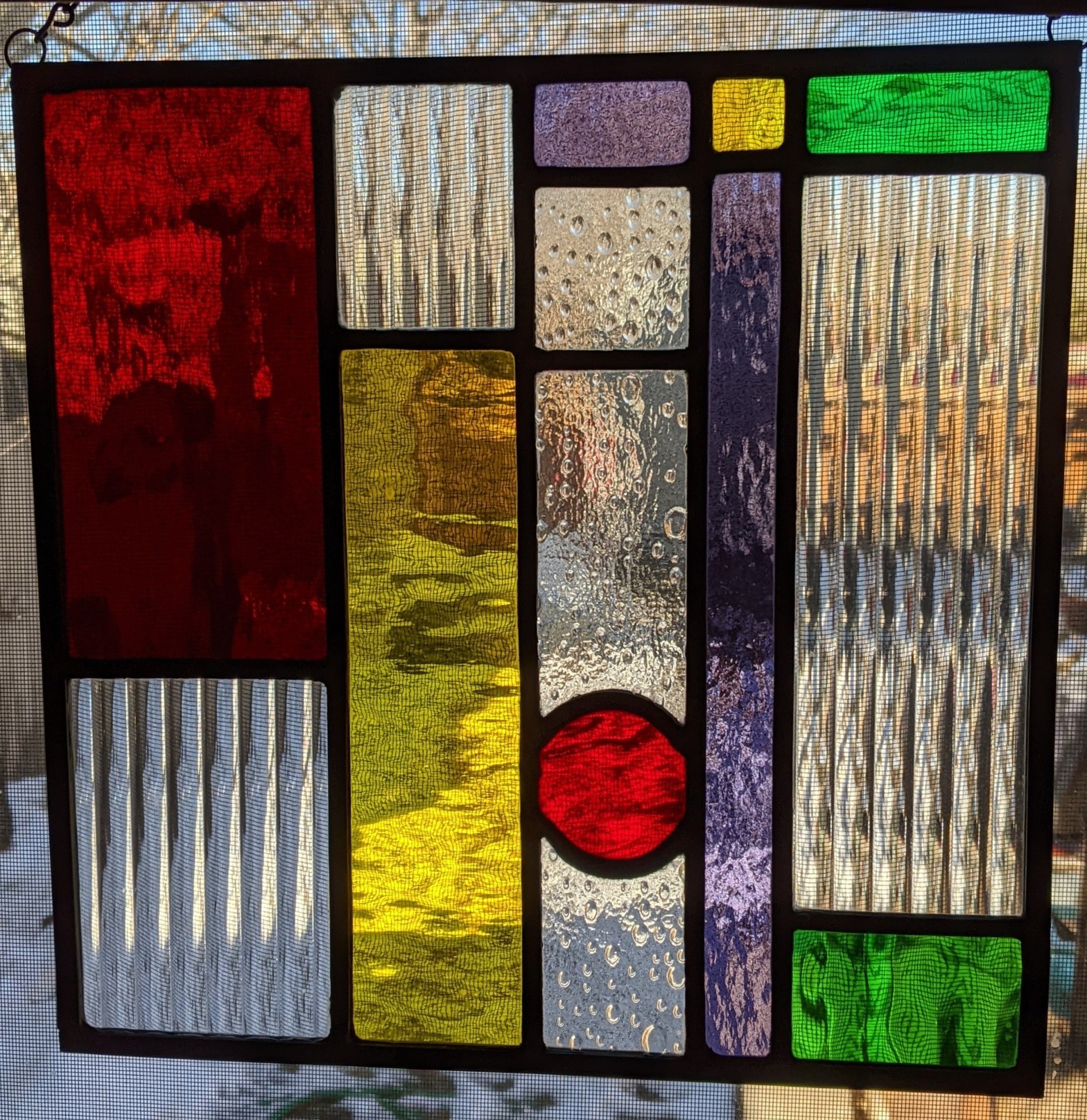
*Image: Sandy’s first stained glass window (and a favorite), 2016


Featured

Kicking Pain

I should probably stop worrying so much about blogging perfection. That’s not the point of this exercise, after all. And I need to keep the words flowing as they are helping me make sense — or at least work through — what has been happening to me.

We write what we know. This I know.


Orofacial clefts are fairly common in the US, affecting approximately 7500 babies each year.

According to the Cleft Palate Foundation, one out of every 1,509 babies are born with isolated cleft palates, while one out of every 902 babies are born with cleft lip, with or without cleft palate. 

The trouble with my particular cleft — palate only — was that the doctors didn’t find it until I was close to four years of age. Somehow no one seemed to notice that my speech was fraught with nasality and I could not shape consonants. It wasn’t until I had my tonsils out that the cleft palate was discovered, triggering a series of events that led me to the Lancaster Cleft Palate Clinic in Pennsylvania, and Dr. Mohammed Mazaheri.

My Mother was charged with driving me to Lancaster from Canton, Ohio, at least once a year, but usually twice. To their credit, my parents sought out and found what was then the premier center for orofacial clefts in the country. I spent a good deal of time being fitted for an appliance, which looked like a retainer but with a ovular ball attached to the back end. That ball pushed up my useless bi-fed uvula and blocked air from exiting my nose. This helped me speak more clearly, but it also required killing my gag reflex. Fitting me for the appliance was not fun. My small mouth felt like it was being overwhelmed by this new contraption. It hurt. I could eat only soft foods for several days, and my Mom would treat me to Zimmerman’s Family Restaurant on Queen Street, where I’d eat lemon meringue pie for lunch.

As the years went by, I began to understand how this birth defect (I use the term loosely– “defect” is relative) created a cascade effect in my head that involved my Eustachian tube, ears (particularly my right ear), sense of balance and sinus problems. My childhood was spent dealing with recurrent ear infections, which led to an ENT putting tubes in my ears and to my taking doses and doses of grape-flavored Dimetapp, a decongestant. To this day I still abhor anything grape flavored.

One day when I was about 11, I was sitting on the couch in the family room when I felt something weird in my right ear. Soon enough the “tube” that had tried to drain my drum rolled out. It was a small green cylinder, cinched at the waist. I marveled at it, caked with wax and puss. So lovely. So not working.

By the time I was 14, I struggled with near-constant ear pain, congestion and overall lethargy. My body had been fighting a low grade infection for who knows how long, and I couldn’t seem to get my ear doctor to treat the underlying cause. He kept saying I needed surgery, but would put it off, make some excuse, while I just kept feeling like shit. My Mother, who took me to all of my doctor appointments, didn’t believe me when I cried out in pain during an exam. The ENT said “I’m barely touching you, that can’t be painful,” to which I replied, through tears and disbelief, “It is.” My Mom stood near the door to the exam room, her arms crossed, a look of annoyance on her face. “Let’s not play games,” she said.

I had to take matters into my own hands. And so the next week, while at school, I made myself fall within sight of the study hall doors. I told the principal I was dizzy and my head hurt. Soon thereafter my Mom took me to see another specialist, this time in Akron. He said I definitely needed surgery, but to perhaps take me to the department of otolaryngology at The Cleveland Clinic.

My doctor at the Cleveland Clinic had just come to the United States from Israel; he was a “teaching doc,” so he often had med students join him on his rounds. When I arrived in his office, he took one look at my ear and asked my mother how I was even standing up. I was admitted to the hospital that day, where I remained for three weeks.

On October 31, 1995, I underwent a radical mastoidectomy. All of my bones of hearing and ear drum on my right side were taken out. The cholesteotoma that had been growing in that ear for far too long (imagine a tumor with webs of disease taking over my entire ear) was cleared out, and I actually had better hearing post-op, through the mastoid bone, then I did before the surgery.

I went home to recover, but my time away from the Clinic was short, as I began to experience facial paralysis, and soon the entire right side of my face stopped working. I had to tape my eye shut to sleep. I smiled a very crooked smile. I did not shed tears from that right eye.

A course of steroids decreased the inflammation of my facial nerve and slowly I gained back control of my facial muscles. But this was just the beginning of a long, drawn out series of medical problems I would experience in my life. And though I believe that dealing with so many body/mind issues led me to develop a deep wellspring of empathy, I can also say that health issues have beaten my ass down and created truck loads of hopelessness and despondency over the years.

Since that first ear surgery, I’ve had countless sinus infections, some lasting months at a time, two sinus surgeries (one was a septoplasty for an extreme deviation and and it was absolute hell), and a hysterectomy. Turned out that the fibroids I had in my uterus were huge, and one in particular was worrying my gynecologist. It didn’t look right to her, and she wanted it out, fast. Her hunch was right: Once biopsied, the fibroid was found to have cells consistent with uterine sarcoma. My doctor told me that she’d seen this particular presentation in two patients in 25 years, and lucky me, I was one.

I don’t like to separate the mind from the body–as far as I’m concerned, they are one entity, and illness is illness. I use the term “mental illness” as a catch all, but it’s woefully inadequate. It’s one of the things that perpetuates this notion of a diseased mind that is unpredictable, dangerous, “crazy.”

The fact is that I began exhibiting symptoms of mental distress (better term) when I was about 15. My mother was fighting breast cancer, and would soon undergo a double mastectomy with reconstruction (saline implants). My grandmother, with whom I was exceedingly close, was dying. I had older siblings who wanted zero to do with me, and a father who was checked out emotionally.

Was I “pushed” into bipolar process as a result of these things? I’ll never know. But I do know I was coming home from school and sleeping well into the evening, rising only to eat dinner because I had to show up at the table or else. I lied, a lot. I spun stories to try and make sense of the inferno that was in my brain. I had a massive crush on my French teacher, who happened to be a woman. I told her I was having an affair with a much older man who lived in California. That sure got her attention! At the bottom of it all was an ugly, terrifying secret locked up tight: Starting in 4th grade, desperately seeking male approval, I’d unwittingly become a sex toy for several horny neighborhood boys. My first first blowjob was at 10. I have no idea how I even knew what to do, but I was a quick study. And then, at 13, I was sexually molested by a 23 year old man. Yes, I wanted it. I wanted to be loved. I wanted to be seen. This is irrelevant, of course. That man had the power, and I was just a kid. Pedophiles know exactly what they are doing. I understand that now.

At 18, when I finally told two members of my family about the abuse, I was not believed. “You can’t be 13 and call it abuse,” I was told. And so I stopped believing myself. I also stopped telling people about what happened to me. For more than twenty years, I told myself the abuse was my fault.


It wasn’t until I moved to Colorado that I finally dealt with my mental distress, as well as the reality that I had been violated by a man whom I trusted. I had to deal with it: I’d landed an awesome job and needed to be clear-headed, healthy, present. Thanks to a very smart, intuitive psychiatric nurse practitioner, I was able to get on the right medication and soon began to feel more even, less strung out emotionally, more in control. There was less self-sabotage, more exercise, fewer mood swings and crying jags. Better concentration. I slept soundly for the first time in my life.

Still, I kept dealing with persistent back problems that sometimes got so bad that I couldn’t stand up. This went on for years, and I tried every modality imaginable–it wasn’t until I found a certified Rolfing practitioner that I was able to get some relief. Eventually, even that didn’t do the trick. For almost a decade, I learned to live with constant, nagging pain. NSAIDs helped, to a degree, as did consistent movement, like walking or riding my bike. I learned to keep the worst pain at bay, but I also convinced myself that this was my lot in life: chronic pain. Deep down, I held tight to a tether of self-blame and deep shame, and pain was my penance.

Undoubtedly this was one of the major contributors to my succumbing to a major depressive episode in 2015. Four solid months of the worst psychic pain imaginable. I truly wanted to die. For someone who was regularly obsessed with her weight, losing more than 30 pounds was just something that happened to me, and I didn’t care either way. A tweak of my meds brought me back to my life, but I will never, ever forget what it felt like be so outside of myself, weighed down by a suit of darkness that I could not shed. Depression is visceral and relentless. It’s heavier than anything I’ve ever carried, and I don’t think I’ll ever be free from worrying about its return.


The daily pain persisted. Even moving in bed, turning over, hurt like a bitch. My back would spasm to the point where I was immobilized and afraid to lift a finger. If I turned my neck the wrong way, shooting pain moved down into my shoulder. On those days and nights when my sciatic nerve went haywire and I wanted to stick a hot poker in the crease between my leg and my butt, I took Neurontin. It was the only thing that worked outside of narcotics, and those I would not touch.

Something had to change. And just last week, it did, though it came in the form of a life-changing diagnosis.

After numerous tests and many years of “suspecting” I may have an underlying condition that was creating seemingly-unconnected health problems–recurring iritis, urinary issues, GI discomfort, intense joint pain, bone spurs, arthritis–I was formally diagnosed with an auto-immune disease, ankylosing spondilitis (AS).

AS is a condition of the spine, a rare type of arthritis that causes pain and stiffness. It’s also known as Bechterew disease, and usually starts in your lower back, but can spread up to your neck or damage joints in other parts of your body. It’s an inflammatory process that can do serious damage to your heart or other organs if left untreated. My C-reactive protein, which helps measure inflammation in the body, is at a 19 right now; normal levels range from 0-3. My body has been fighting this illness for quite some time, but diagnosing AS can be very tricky. My case is pretty textbook, though. That’s the good and bad of it.

And so. I have to start taking immunosuppressive drugs to try and get my body’s immune system to calm the hell down. Right now it’s attacking deteriorated discs in my spine and growing bone around them. Stopping that may help reduce the amount of stiffness I will experience, and I may be able to avoid being wheelchair-bound by the time I’m 60. I’ll have to administer self-injections every two weeks, and my insurance company has told me how fortunate I am that I will only pay $127 a month for this “specialty medication” because their out-of-pocket expense is $5200. Good god.

Am I tired of being sick and tired? Absolutely. This diagnosis hit me hard, and I’m still reeling from it. But maybe, just maybe, I can get to a point where pain stops catching a ride in my sidecar, despite my repeated attempts to kick it out. Maybe I can tackle hiking those 13ers this summer after all. Maybe I don’t deserve to be punished ad nauseam for things I couldn’t control, things I did to survive the hand I was dealt, or the mistakes I made to try and find love and acceptance.

Maybe the path to relief is cleared for travel.
Featured

Done By a Woman

Many of you may not know that I have a deep love of art (and architectural) history. My passion for art grew exponentially when I took a course from the late Thalia Gouma-Peterson, professor of art history at The College of Wooster, in 1991.

The class was Women Artists 1940-Present, and wouldn’t you know that Thalia had pieces from her personal collection that she brought in to class and passed around: I recall caressing the curve of a sculpture from Elizabeth Catlett, marveling at the kinetic energy of a small Louise Bourgeois sculpture, tracing the lines of a Miriam Shapiro painting, and falling deeply in love with everything Louise Nevelson created. Those classes flew by in what felt like an instant — Thalia had a remarkable way of teaching that drew you in, captivating your imagination and not letting go until you walked back out into the weak Ohio sunlight, blinking, certain you’d just been on another planet entirely.

During a meeting with Thalia wherein we discussed the possibility of my helping her (as a teaching assistant), she called me a feminist. “Um, I’m not a feminist,” I replied rather meekly. Thalia squared her strong shoulders, sat up straighter and looked me in the eye. Burned through.

“Of course you are a feminist,” she said, her Greek accent thick with certainty. She laughed. “Deny it all you want, my dear. But you are a feminist.”

She changed my life that day.

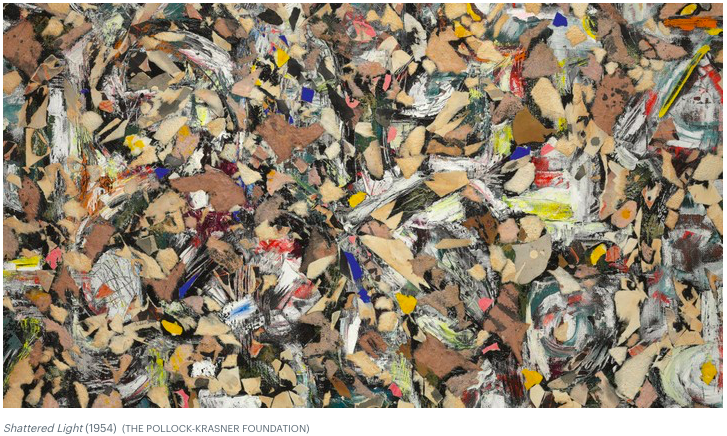
Women Artists 1940-Present” also introduced me to the work of artist Lee Krasner, whose name was often synonymous with her husband, Jackson Pollack. A remarkable artist in her own right, Krasner’s work was frequently overshadowed by Pollack’s fame, but her contributions to modern art cannot be underestimated. Exploring the outer reaches of abstract expressionism, Krasner’s work had energy to spare, and I often found myself getting lost in her paintings. Unfortunately, her intense self-criticism and a near-obsessive tendency to revise and revise her work led her to burn or destroy many paintings and collages. Lucky for us she didn’t reduce them all to ashes.

This one, ‘Shattered Light’ (1954), is a favorite.

Which leads me to today’s #backpocketpost, a poem, “Regards for the inner light (L.K.).”

(In the 40s-50s, Krasner often left work unsigned, or used the genderless initials “L.K.” Typically in the 1940s and 1950s, Krasner also would not sign works at all, sign with the genderless initials “L.K.”. She also incorporated her signature into the painting itself, blending it until almost unrecognizable, as she did not want to draw attention to the fact that she was a woman or the wife of a famous painter.)

Lately I’ve been thinking of what Hans Hoffman, one of Krasner’s early teachers, said to her in 1937: “This is so good, you would not know it was done by a woman.”
(2020 reframe: This is so good, you know it was done by a woman.)
The poem that follows grew out of that comment.

Regards for the inner voice (L.K.)

Linseed-scented skin, bitten nails
fine wrists, hollows in places
few could reach,
she was not the climbing
or falling through
Brooklyn-born, Bessarabia-bred

she was the rising early
the first spark
the being pulled into
her forms not a likeness
but a flight in

And when she opened her doors
no language save collage
rushed out
cubist musings
on economies of ego

scissors at the ready
and half-day silences
thick with smoke after smoke
bread, then bourbon, the pigments
spread, the pendulum swings
work so good you would not know
it was done by a woman.

Contemplating
deliberate destruction
of what sits before her,
she pulls on a black coat
walks the creek bank

din of crickets and
inner critics rising and falling
like a dirge. Surrounding her,
pushing at her, 50s America
perfect and pure
so many pretty pictures
each one lacking a pulse.
Scenes but not events
like history without ruins
or vast museums built
to house the dull.

She returns to the studio
stokes the woodstove
and rips the canvas
from its frame. There is
no time like the past.
Let it burn.


Featured artist: The Still Tide

“Keep It,” from the 2020 EP “Between Skies” (click on photo to listen)

Featured

Introducing #backpocketposts

As I work on long-format pieces for this blog, I keep thinking about other topics I’d like to explore in shorter posts, a #wordburst if you will. My solution to this is #backpocketposts, designed to fill in those gaps in time when I’m busy researching and putting together a more in-depth analysis of whatever my brain is chewing on at the time. At the conclusion of each post I’ll feature a song from an artist I admire. Words and music! I call that necessary sustenance.

Back Pocket Post No. 1
Hard to Love
December 7, 2020

I saw a meme recently with this quote: “I’m sorry if anyone made you feel like it’s hard to love you.”

It made me pause. I have felt that — unloveable. Prickly. My emotions were often right below the surface, waiting to blow at the nearest person or thing that lit my fuse. Did I know then what I know now? That I learned to default to anger for pretty much every emotion I felt? Fear blew up into anger. Anxiety erupted into rage. Perceived lack of control invited the slamming of doors and punching counters.

Diagnosed Bipolar II twenty plus years ago, I started taking psychiatric meds when I was just about 30. (Since then I have come to understand that I have an anxiety disorder and PTSD; my illness is closer to cyclothymia than Bipolar II. But I’m also quite wary of the DSM (Diagnostic and Statistical Manual of Mental Disorders [DSM–5]). “Diagnoses” can be terribly misleading, and sometimes cause untold amounts of suffering, confusion and very real damage.)

Looking back, I can’t believe it took me so long to live un/strung out from chaos, from self-inflicted emotional ascents of the Pain Pitch. My family, particularly my father, was anti-psychiatric everything (God would provide — God didn’t create people with “mental illness,” etc.) and I had serious hangups about taking meds. No one seemed to know what the longterm effects of these SSRIs were, really, and I wasn’t interested in being a guinea pig. Then again, I was very interested in relief. Leaving behind great pitches of emotion that carried me through days with tears in my eyes the whole time, crying jags that made me hide in my office — leaving behind self sabotoge just so I could feel something — leaving behind explosions that were completely disproportionate to the matter at hand.

The relief I felt from leveling out for the first time in my life was incredible. I had energy and motivation; I managed to keep up with an exercise regimen and weight loss program (Weight Watchers at the time), and lost 35 lbs. Slowly, with the help of a therapist, I began to understand better what had been “wrong” with me all these years. It would take more than a decade plus more before I could even begin to unravel the giant spool of how my family and my upbringing fed my mental illness. Without knowing it, I had become the “identified patient,” carrying the emotional baggage of family members who categorically refused to recognize their own issues and how they contributed to an atmosphere of denial and compartmentalization. Want to box up your emotions and put them on a shelf, over and over again? I have the consummate guide for that.

The point here is this: No one should feel hard to love. No person should hold back to a spectrum of emotions just to appease the “adults” in his/her/their life. Behind every hard emotion is an even harder story, one that has developed such a protective shell that it appears impenetrable.

Receptivity helps. Listening can make all the difference in the world. Once we realize that the barbs being thrown our way by the people we love aren’t meant to pierce — they are mere defense mechanisms designed to protect and insulate one from perceived harm — then hopefully we can create a loving boundary with our loved one. Because beneath that rage is pain. On the other side of those words that feel so ugly is a person struggling to express thus far-unnameable emotions.

No one is too hard to love. But despite our good intentions, humans can definitely make it difficult for a person to feel seen, and heard. Perhaps one way to stay out of the dark canyons of conflict and misunderstanding is to listen more and get out of your own way. If a loved one is raging, don’t keep listening for some slight or insult that you need to defend. Listen to listen. Remove yourself from the equation. This isn’t about you, even if it seems that way on the surface. Realizing that and applying it is more than half the battle: It’s the key to healthy growth in relationships with every single person we know.

Brianna Straut, “Salt in My Wounds” https://www.briannastraut.com

Featured

Everything is Always Over

Over time I will dial in this blog more – fonts, templates, photos, etc. But for now, I need to get some things out of me. First: this blog’s namesake.

My maternal grandmother lived until she was 105. My mother was her oldest child; Grams had a son with her second husband, who was 21 years younger than my mother. My great grandfather had a saying that my grandmother repeated often, and always in this deep voice, as if her father was speaking through her: Everything is always over.

Grams employed this phrase when she was instructing a person to just let it go. The past is past, and there’s nothing you can do about it now. Best to look ahead, toward tomorrow, and trust that you learned something valuable from the days streaming like contrails behind you.

I heard Grams imitate her father’s basso profundo voice so many times over the years, but I never truly understood what that phrase really meant. It wasn’t until my mid-40s that it started sinking in, and if a long life is a sign of a good life, then this adage works wonders. Grams was also fond of saying that attitude is everything. This too I have taken to heart, and it’s become one of my north stars. When waves of crankiness threaten to drown me, I push to the surface and remind myself that being alive and safe and loved are not things to be taken for granted. Ever. I try to be kind. I insist on honesty.

There’s another twist to the name of this blog, and it has to do with feeling like things really are over. There is no light visible anywhere, just haloes of hazy fog that you can’t wipe from your vision. Days are endless, jarring in their brightness, and most are spent in bed, willing yourself to sleep, sleeping so much that your body begs you to move. You’re sore from not moving. Your stomach is constricting from very little food and you feel lightheaded when you have to get up to go to the bathroom. You spin out an idea that involves a catheter for depressed people that’s just a tube leading from a bedside commode to the actual toilet. You wonder why there isn’t just a simple all-nicotine pill, even though you quit smoking years ago. Your partner leaves for work every morning, and on those days when you can’t rise from the place you feel most safe, she frets all day, tries to distract herself from the thought that you could do it today, you could choose to take your own life while she’s lecturing on Emmanuel Kant.

****

I have long been a fan and follower of the craft beer phenom in the U.S., discovering it with gusto in Missoula, Montana around 1995. After leaving (willingly) a 19-year career in law school communications, I ended up as director of communications at my (then) favorite brewery in Denver. It was a job I’d dreamed about for a long time, and I jumped in with all appendages.

My time at the brewery was wild: intense, fun, challenging, exasperating, enlightening. People outside of the beer industry love to romanticize it, and I understand why. Being “on the inside” of the Denver scene was a hell of a good time, and the camaraderie is authentic. The familial feeling is real (in most instances). But my experience also exposed the hard and exhausting and super competitive underbelly of an industry that has grown into an untamed, ego-driven beast in the past decade (not all beer haha). By the time I quit, in June of 2020 in the midst of the pandemic, I was beaten down by the persistent, unending task that is managing social media, and sick of dealing with narcissistic, selfish personalities. I will never forget those two years and one month, though. I came out of that job with more confidence in my skills than I’d had in a long time, and I came out with friends I keep up with, invest in, some of whom are now like family.

****

Providing this backstory on my life in beer is necessary in order to understand this: It was excruciatingly difficult to hear that a brewer at Trve Brewing here in Denver died by suicide earlier this week. I did not know him well. We’d met, and I’d hung with him in groups at beer events.

When you hear that a person in your industry made the decision to leave this earth, it shakes you, no matter if it was a stranger or a friend. Hell, I consider every brewery employee to be a friend. Every maltster, hop grower, brewer, bartender, cellarman — they are my people.

Suicidal ideation is a mind fuck, but you don’t need me to tell you that. It’s the closest thing to having voices in your head telling you to do something really really bad. Actually, it IS voices in your head telling you to do something bad. And that bad thing is to leave, make the exit, say sayonara and don’t expect a call back. I don’t mean to make a light of it, but those voices and I, we have an agreement. If I hear them, I tell someone.

It wasn’t always like that. The first time I wanted to take my own life I was 15. I carried around a bottle of pills that I’d collected from my own medical procedures (good old Demerol), as well as my parent’s various drugs. I wasn’t sure when I would take them. I ended up taking half of them after a fight with my parents. I never told anyone. I puked about two hours later, then slept through my alarm the next morning. 5:30am comes fast when you’re a teenager.

Did I want to die? Not really. I wanted to change something, anything — I wanted someone to tell me why I felt such pain. I wanted make my father pay for hating me, or so I thought. I wanted so many things that I could not have. Mostly I wanted to run.

This is not about me. Not now. It’s about a man who chose to end his life who was also working for one of the most successful and popular breweries in Denver. He was a hugger. (I am a hugger.) His smile could light a stadium. He had talent and passion and compassion and heart. And now he is gone. He had a choice, as we all do, and he took it. I will not judge him for that. Compassion is all I have. Empathy. Disbelief.

I have spoken with a few people already about organizing a fund that will help beer industry employees access therapy/counseling resources. Help for individuals is what is needed, imo; each person has his/her/their own struggles, and the trick will be finding therapists who can take on a few clients right now. We’re Code Red here. Suicide is another contagion with which we must deal.

This is just the beginning of the conversation, but the fire has been lit beneath me. I have the will, and the time, for this. Lives are at stake. Wish me luck. And welcome to Everything is Always Over.


Sharps Box

Yesterday I was due for my second COVID vaccine but I couldn’t get it because I’ve got a sinus infection.

I’m on antibiotics for a sinus infection, which have plagued me my entire adult life — I’ve undergone two sinus surgeries, experienced more infections than I can ever count, and was gifted with very small sinus openings (according to the surgeon who reamed my sinuses and removed chunks of diseased bone in 2014). My father also fought sinus problems, and swore by Sinutab, a wonder drug that may not even be made any longer. It worked, even as those blister packs took extreme patience to open.

Being on antibiotics means that I can’t take the biologic drug prescribed for my ankylosing spondylitis. There’s a risk of liver toxicity, and probably other interactions that aren’t good for my already inudated-by-drugs body.  So while I treat the sinus infection, I can’t treat the effects of AS, and I’m feeling that, acutely. 

One of the primary markers for this autoimmune condition is low back pain. Millions of people suffer from low back pain, particularly in the L4 and L5 vertebrae. As you can imagine, the base of the spine takes a fair amount of abuse and neglect. But in my case, because of the extreme inflammation in my system, my body saw the wear and tear on those vertebrae as something to be fought, and so it mounted a response, which led to it building a ring of immoveable calcium around my spine. 

Let me try to tell you what that feels like.

It’s not muscular, nor it doesn’t follow a pattern of spasm, release, spasm. It doesn’t burn, at least not in my back (my hands are another story). It feels like how the worst menstrual cramps felt, minus the abdominal discomfort. It feels like an ache that extends to the core of my earth. There’s a specific triangle of pain, an old hand plow, that Vs into my sacrum and radiates outward. I’ve awoken with this pain for the better part of 12 years, though it varies in intensity and in the time it takes for me to shake out once I’m moving. In the last two years, it’s taken longer and longer for that ache to calm and for me to walk without looking like I’m about to fall over. 

If only that was the primary symptom, but systemic inflammation doesn’t work that way. Each day that passes without my AS medication flowing through my bloodstream, my joints grow more and more painful. My neck, shoulders and wrists are the worst. I’ve been doing stretches for my neck, and they seem to help some, but this tension in my lumbar spine is doing a number on my neck muscles. I understand better now that this is part of how the disease progresses, but the neck issue is disturbing. It feels so…critical.

There’s this turn on 6th Avenue here in Denver, a sharp right-hand curve at Colorado Boulevard, that requires one to swivel one’s head way over the left shoulder. The last time I was going to an appointment in that area, I hit the curve like I’d done so many times before and this time, I couldn’t look over my shoulder. I couldn’t even get halfway. My neck popped and cracked like mad. That’s been an unnerving development – my neck never used to make any noise. 

And then there’s the lethargy. It’s like the flu, comes on fast. Faster at times. Can be out of the blue or creep in, a dark fog rolling in from the depths of Heavy. 

I have too many moments when I think: My God, what is happening to my body? What have I done to invite this? I took what I was dealt and did my best to survive. No use denying that my agents of survival were not always wise or supported good health outcomes, but…really?

When I was on Humira, something happened to my body that was akin to anemia, yet blood tests revealed normal iron levels. I had dark circles under my eyes, peed way too often, got dizzy at odd times, could not think clearly and got lost easily. (Getting lost is not something I do. I inherited my father’s innate sense of direction, as well as his love of maps. The real ones.) I switched to Enbrel, which meant I was injecting one a week as opposed to biweekly. Not ideal. This also explains why I had to stop a week-long course of antibiotics instead of threading the needle between shots.

Measure approximately two inches to the right or left of your belly button. Clean the area thoroughly with alcohol swab. Pinch or stretch the skin. Place injector at 90 degrees and push down the top button. Watch the medicine pass into your body via the window on the side of the injector. You will see a yellow stripe. Wait 15 seconds. Release. Discard injector in sharps box. 

Sharps box. I have a sharps box in my house now.

What surprises me is that I don’t know anyone else who has ankylosing spondylitis. Or maybe I do, and I’m not aware of it. I’ve done my best to stay away from the interwebs and the horror stories there. Like most auto-immune diseases, AS varies in intensity – some people have nary a symptom save for some occasional back pain and random bouts of iritis, whereas others are wearing back braces and ordering wheelchairs.

I don’t know what the future holds, so I take to heart the advice of my friend Joel, a Buddhist-centered therapist, and I “keep writing about it.”  It’s the only thing I know that can temper the fear that this disease is a beast whose sole desire is to inflame me dead. I’m far from a place of acceptance, but I also know that speaking it, releasing it via the written word, is the only way through.